Notice of 2nd Public Hearing for Annexation of Property
Click HERE to see full notice
Click HERE to see full notice
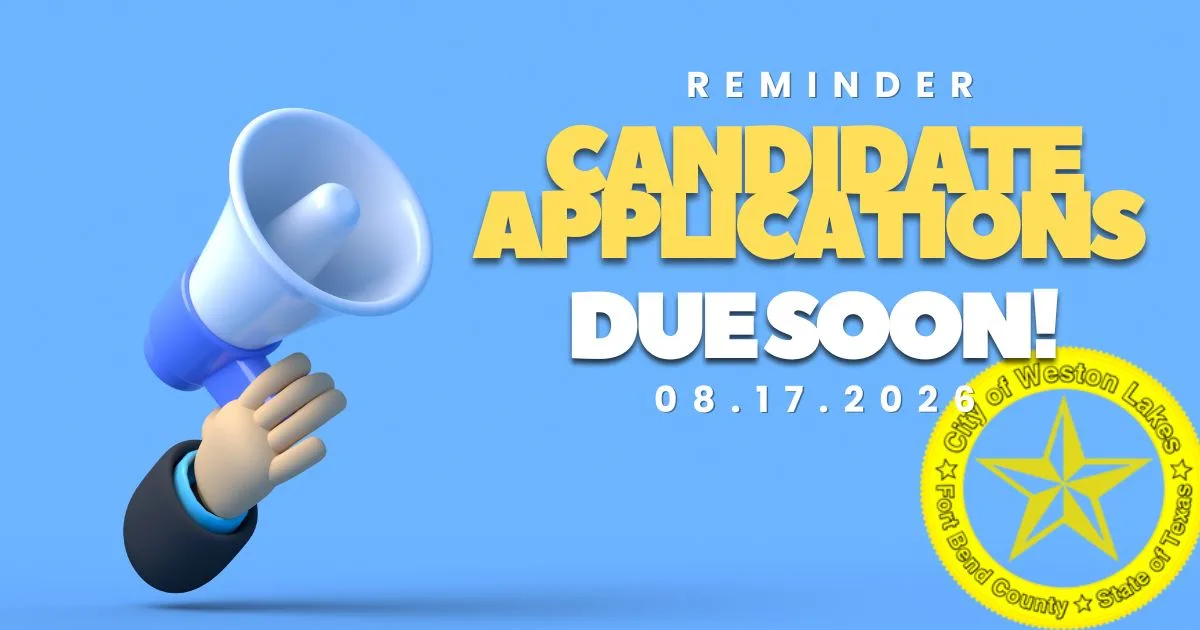
Candidate Applications are due back to the City Administrator by 5pm on Monday, August 17th. Remember that our office is only open on Monday and Wednesday 11am-5pm. Applications must be notarized. The City Administrator is a notary, but please note that she only works on Mondays. You may also email your completed application to citysec@westonlakestexas.gov.
Candidate Applications can be picked up at city hall or they are available on the city website under Elections:Election 2026.
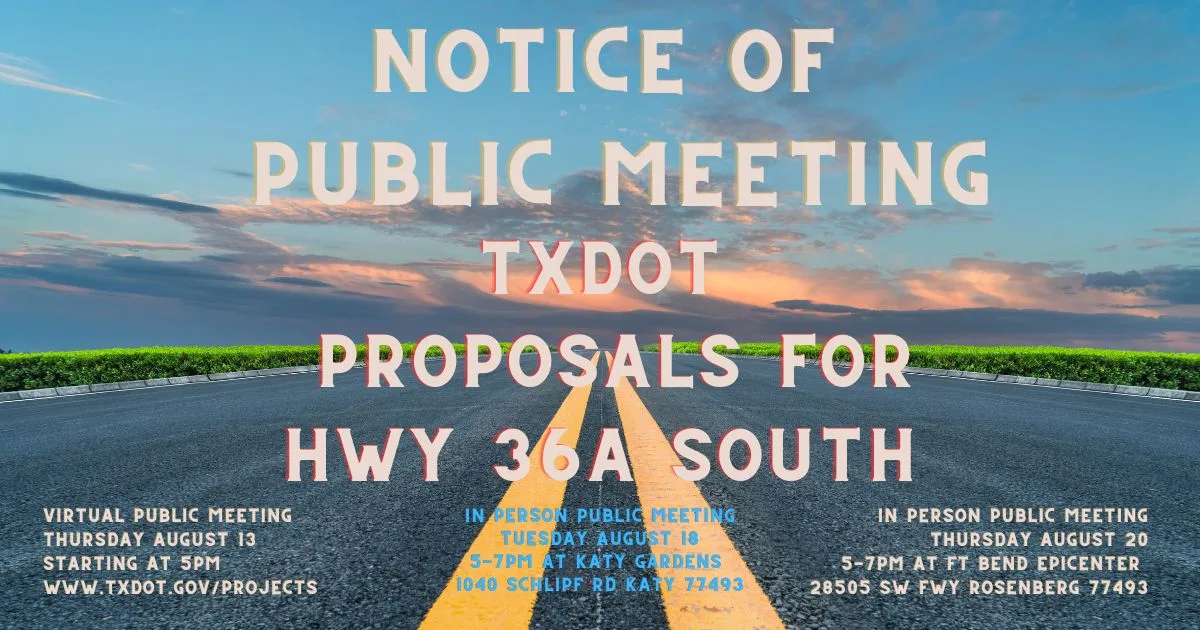
Document with all the details HERE
The City Council of Weston Lakes will hold a regular council meeting and public hearings on Tuesday, July 28, 2026 at 6pm
Click here to see public notices for the public hearings to be held July 28, 2026 at 6pm at Weston Lakes Country Club.
The proposed budget can be viewed HERE.
A public hearing will be held Tuesday, July 28th at 6pm at the Weston Lakes Country Club.

The City of Weston Lakes will once again be able to sponsor beginner swimming lessons for the children of the City of Weston Lakes with funding provided by the Fort Bend County Child Safety Fund. We also appreciate the cooperation of the Weston Lakes Country Club in providing a venue to allow the lessons to take place – the Family Pool located in The Park. You can access through Ragle Park or by Bowser Road.
The group lessons introduce water safety, comfort in the water, breath control, swimming on the front and back, basic swimming skills development, and fun in the water. These classes will emphasize water safety and how to swim without assistance. Again, these introductory lessons are geared for a beginning-level child who is at least 3 years old.
The Schedule:
· Session 1: July 7 – July 17
· Session 2: July 21 – July 31
The number of participants is limited due to funding and will be enrolled on a first-come first-served basis. Please send an email to:
swimlessonswl@gmail.com
Please include the following information:
· Parent Name(s)
· Child Name / Age
· Address
· Telephone Contact
· Email Contact
· Date / Time that WILL NOT work for you
Just a reminder, our May City Council Meetings are always the 3rd Tuesday, due to the club being closed for the holiday.
See you next Tuesday, May 19th at 6:00pm in the ballroom!
Regular City Council Meeting next Tuesday at 6pm in the Weston Lakes Country Club ballroom!